
Academic solidarity requires those in secure positions to shoulder greater responsibility, rather than constantly expecting courage from those at risk.
When we think of the demise of democracies, images of coups, shuttered parliaments, and overt repression still come to mind. Yet, contemporary authoritarianization often proceeds much more quietly. Elections continue to be held, universities remain open, and courts continue to function; however, the independence of institutions and society’s shared ground of reality can gradually erode.
The V-Dem Institute’s 2026 Democracy Report shows that authoritarianization is no longer an exceptional occurrence. According to the report, the vast majority of the world’s population lives under autocratic regimes, and democratic backsliding continues in many countries. Freedom of academic and cultural expression is also in decline in countries undergoing authoritarianization. Therefore, viewing the pressure on academic freedom merely as an internal university matter would be a grave mistake. Academic freedom serves as one of the early warning systems for the democratic order. [V-Dem Democracy Report 2026](https://www.v-dem.net/publications/democracy-reports/)

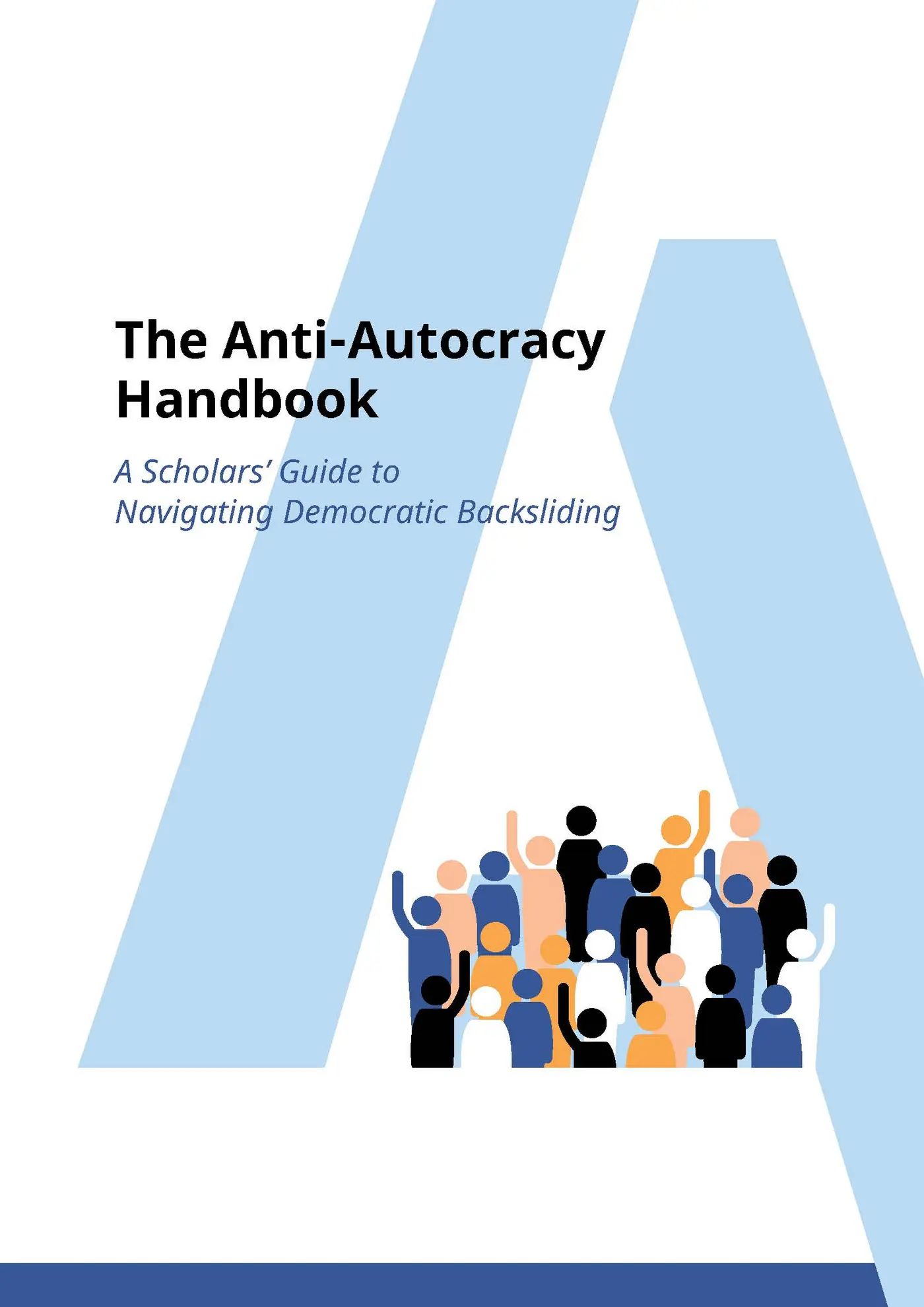
The Anti-Autocracy Handbook, prepared by Stephan Lewandowsky and his colleagues, highlights three elements frequently employed by authoritarian movements: populism, polarization, and post-truth politics. Society becomes increasingly divided into the “real people” and “enemies”; expertise is cast under suspicion, and facts are evaluated based on who they serve rather than on their veracity (https://www.mpib-berlin.mpg.de/2094097/newsreserachresults-2025-arc).
This is where science and the authoritarian mindset diverge. Science asks, “How do we know this?” Authoritarian politics, on the other hand, says, “Who has the right to question this?”
Pressure on universities often does not begin with overt bans. Restricting research funding for certain topics, selecting administrators based on political loyalty rather than merit, labeling certain concepts as “objectionable,” or academics self-censoring out of a desire to avoid “stirring up trouble”—these are earlier and more typical signs.
This is where one of the Handbook’s most crucial warnings emerges: the issues of self-censorship and “anticipatory obedience.” When a system generates sufficient fear, it need not ban every article; the academic already knows which sentences to avoid writing. It need not ban every field of research; young researchers learn which topics pose a danger to their careers. Thus, pressure shifts from being externally imposed to residing within people’s minds.
Academic solidarity plays a vital role in this process. The mechanism the Handbook calls the “Serengeti strategy” is simple: isolate one member of the herd, leave them alone, and send a message to the rest. When an academic is targeted, the primary goal is not merely to punish that individual but to demonstrate the boundaries to everyone else. Therefore, standing by a targeted colleague is not just a moral act; it is an institutional defense mechanism against authoritarianism.
An academic’s duty is not to oppose a specific party or ideology. However, freedom of research, freedom of expression, the rule of law, pluralism, and university autonomy are fundamental conditions of academic life. When these conditions are being dismantled, declaring “I am a scientist; I do not get involved in politics” does not always equate to neutrality.
The fundamental principle here is this: the greatest responsibility falls upon those who possess the greatest security. One cannot expect the same things from academics holding permanent positions in strong institutions—located in countries where democratic safeguards still function—as one does from young researchers facing the risk of imprisonment, dismissal, or exile. Academic solidarity is not about constantly expecting courage from those at risk; rather, it is about those in secure positions assuming greater responsibility.
The most dangerous moment for democracy may not be the moment when people are forbidden to speak. A far more dangerous moment is when they begin to give up speaking before any such ban has even been imposed.