

We know what the mindset of “There is no need for a court order, break down his door and take the man” means in politics. If judgment comes before evidence and due process, then in academia, too, the fight against misconduct can become not a means of justice, but a tool of purge.
One of the gravest accusations that can be made against a person in academia is academic misconduct. Allegations of plagiarism, fabrication of data, false statements in an academic CV, or claiming credit for someone else’s work can call into question not merely a single publication, but the reputation an academic has built over many years.
For this reason, allegations of academic misconduct must be investigated. Yet the way such accusations are voiced, investigated, and brought before the public is equally important.
The events surrounding Cambridge University professor Jason Arday in the summer of 2026 brought this dilemma into sharp focus (https://www.aljazeera.com/news/2026/8/20/university-suspends-us-academic-leading-jason-arday-plagiarism-accusations).
Jason Arday was appointed a professor at the University of Cambridge in 2023 and attracted considerable public attention as one of the university’s youngest Black professors at the time. Later, allegations emerged that he had committed plagiarism in his doctoral thesis and some academic publications, and that he had provided inaccurate or exaggerated information about his academic qualifications and personal achievements. Over time, the allegations moved beyond academic circles and received extensive coverage in the British press.
In a statement dated 2 August 2026, the University of Cambridge said that it regarded the allegations of academic misconduct as “extremely serious” and noted that claims of plagiarism concerning Arday’s doctoral thesis and some of his publications had previously been investigated by Liverpool John Moores University, where the work had been carried out, and by the relevant journals.
A few days later, Cambridge announced that, in light of new information, it had opened a fresh review into Arday’s academic qualifications and honorary positions. In the same statement, the university particularly emphasized that the process should be fair and that university policies and employment law should be observed.
Arday resigned from his position at Cambridge on 5 August. While rejecting the allegations against him, he acknowledged that he had made mistakes. However, he objected to being portrayed as a “liar,” a “fantasist,” and an “academic fraud.” He had also said that the public pressure had taken a heavy toll on both him and his family.
On 14 August 2026, 41-year-old Jason Arday was found dead at an address in London. The Metropolitan Police described the death as “unexpected,” but not suspicious.
There is insufficient evidence to establish a direct causal link between Arday’s death and the academic allegations or media coverage concerning him. Nevertheless, what happened has prompted a serious debate about the personal and social consequences of academic accusations.
One of those who brought the allegations against Arday into the public sphere was the American researcher Nathan Cofnas. Cofnas had previously been the subject of considerable controversy at Cambridge because of his views on race, intelligence, and diversity policies. A few days after Arday’s death, Ghent University, where Cofnas was employed, initiated its own proceedings.
On 20 August, the university announced that it had opened a preliminary disciplinary investigation into an unnamed postdoctoral researcher, identified in media reports as Cofnas, and had temporarily suspended him as a precautionary measure. The university justified its action by referring to the principles of respect for human dignity, opposition to discrimination, and the responsibilities that accompany academic freedom.
The measure was later modified. On 26 August, Ghent University decided that the researcher would work remotely for three months, would not teach, and would limit his research to the areas for which he had been appointed. The disciplinary investigation, however, remained ongoing.
Thus, within the space of a few weeks, an unusual picture emerged: first, one academic accused another of academic misconduct. Investigations were then opened into the accused academic. Afterwards, the academic who had made the accusations himself became the subject of disciplinary proceedings at his own university.
This raises an obvious question: where is the line between exposing academic misconduct and publicly condemning an academic? The lesson to be drawn from this case is not that allegations of academic misconduct should remain unspoken. Science is built to a large extent on trust. When a researcher notices possible plagiarism, data manipulation, or another serious ethical issue in another researcher’s work, they are expected to report it. Universities, however, must also investigate such reports independently of who the accuser is.
Disliking the political views, personality, or past of the person making an allegation does not invalidate the evidence they present. Likewise, the fact that an academic is admired by society, supports disadvantaged groups, or is held up as a role model does not mean that their academic work should be exempt from criticism.
Words such as “plagiarism,” “misconduct,” or “scientific fraud” are extraordinarily powerful labels in the public sphere. Once a person’s name begins appearing in internet searches alongside words such as “fraud,” “plagiarism,” or “liar,” serious and sometimes irreversible reputational damage may occur before any investigation has even been concluded.
In any investigation, the process should work as follows: after an allegation is made, the evidence is examined. The accused is then given the right to respond, and an independent assessment is carried out. Today, however, this sequence can easily be reversed: judgment comes first, and evidence is sought afterwards. Even remarks such as, “There is no need for a court order, break down his door and take the man… Whatever law is needed can be passed,” still remain in public memory (https://www.hurriyet.com.tr/gundem/son-ses-kaydi-soke-etti-kapiyi-kirin-alin-adami-25990417).
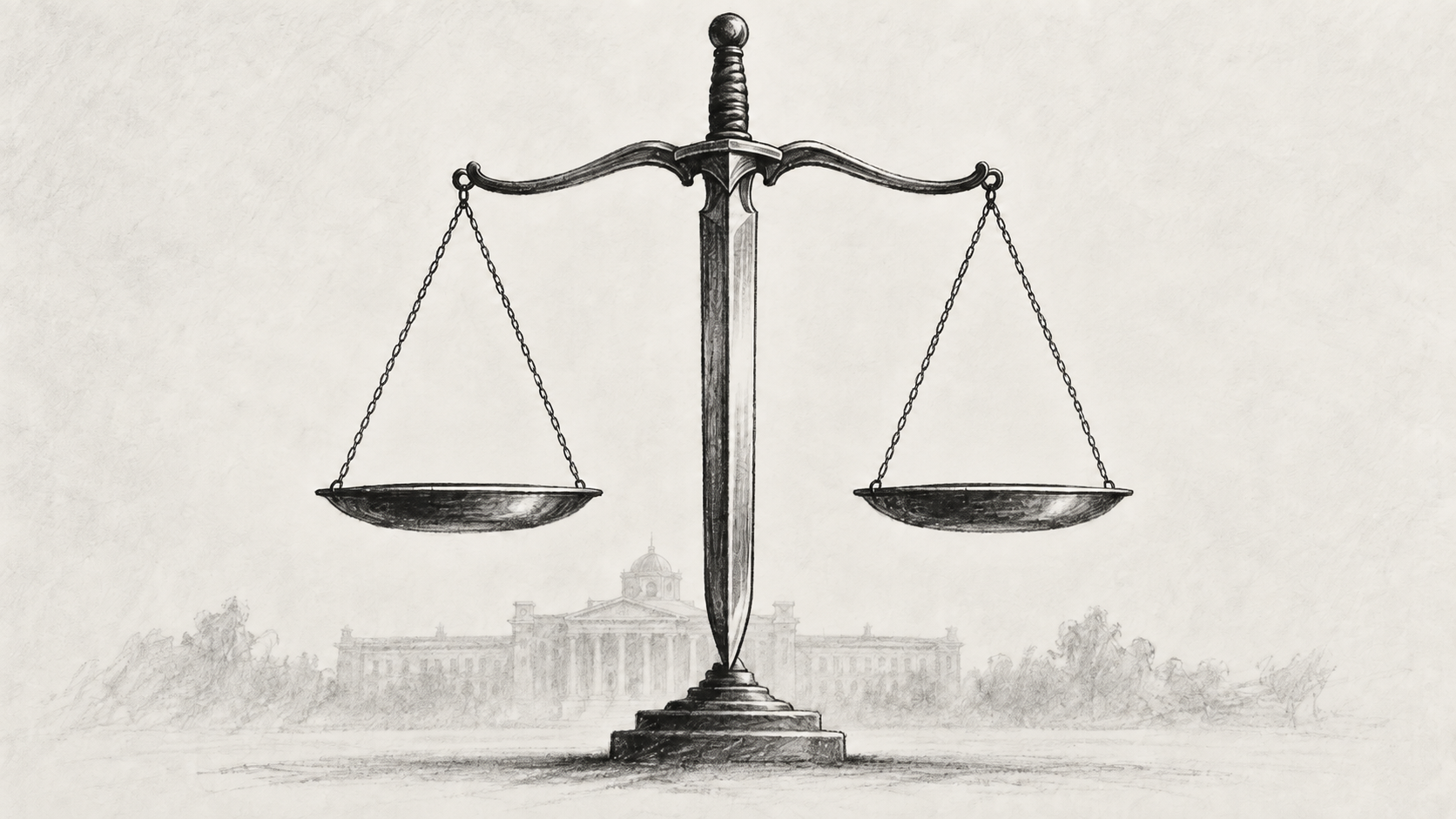
An accusation of academic misconduct can therefore become a double-edged sword. On one edge, it enables science to protect itself; on the other, when used without adequate procedural safeguards, it can damage an academic’s character and career.
In its own statement, Ghent University emphasized its commitment to academic freedom and open academic debate, while noting that such freedom entails responsibilities and may be limited to protect the rights of others (https://www.ugent.be/en/news-events/updates-case-postdoctoral-researcher).
A statement later issued by the University of Cambridge is particularly noteworthy in this respect. Following the Arday case, the university stated that academic excellence, merit, fairness, and “due process” should not merely be principles professed but standards genuinely reflected in how people are assessed and treated (https://www.cam.ac.uk/notices/news/statement-to-the-cambridge-community).
But if, in doing all this, we lose sight of human dignity, we risk damaging one of the very core values of academia that we are trying to protect. What matters, therefore, is not eliminating the sword, but who wields it, on the basis of what evidence, and through what process.