

Is the cause of the moral decline the thieves themselves, or the fact that people emulate them?
There was a time in Türkiye when young women were barred from universities for wearing headscarves. The struggle of those defending their right to education was not merely about a piece of clothing; it concerned universal values such as justice, equality, and human dignity (https://www.hrw.org/legacy/backgrounder/eca/turkey/2004/index.htm).
Years have passed since then. Women wearing headscarves have entered universities, parliament, and government ministries. Their numbers, visibility, and influence have all grown. However, there is significant evidence that those among them who hold prominent positions have lost their sense of shame and have normalized theft, corruption, and violations of others’ rights. One is compelled to ask: “What happened to the values that were once championed?”
The fund scandal that has unfolded in Türkiye in recent weeks has brought this question back to the fore. It is a contradiction worth pondering that individuals now linked to allegations of corruption have emerged from a movement that once rose up demanding justice. Clearly, growing in numbers does not equate to moral advancement (https://www.euronews.com/2026/09/28/turkey-lifts-asset-freezes-in-fund-probe-as-ruling-party-deputy-chair-quits-amid-share-tra).
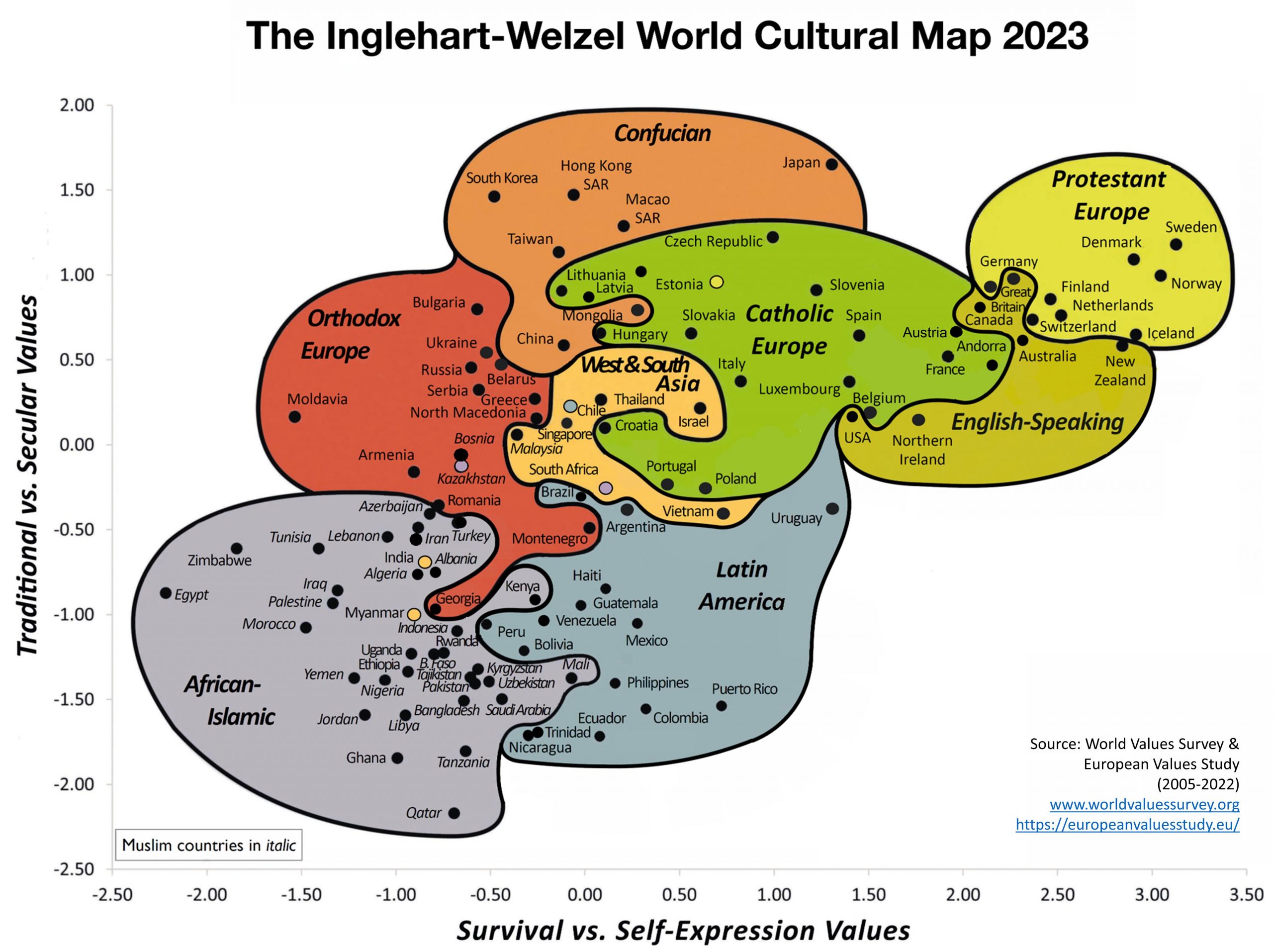
This issue is also attracting the attention of social scientists. The cultural map developed by Ronald Inglehart and Christian Welzel, based on data from the World Values Survey (https://www.worldvaluessurvey.org/), compares countries across two fundamental dimensions: traditional versus secular-rational values, and survival versus self-expression values.
An interesting picture emerges when looking at the map. Historically Protestant European countries—such as Sweden, Norway, Denmark, and Finland—form a distinct cluster that places great importance on individual freedom and self-expression. Turkey, on the other hand, falls among the countries where traditional values and concerns regarding economic security are more pronounced.
Research indicates a strong correlation between economic development and these values. As prosperity and economic security increase, societies tend to prioritize not only making a living but also freedom, participation, and quality of life. However, the influence of historical and cultural heritage does not disappear entirely, even when economic differences are taken into account.
This map does not indicate which societies are more honest or moral. It does, however, serve as a reminder that development has a cultural dimension alongside the economic one. A society’s level of development cannot be measured solely by per capita income, the number of universities, or parliamentary representation. What matters more is the values people uphold—and, more importantly, the values by which they live.